

HyperX 2026 Software Release: Version 2026.1.13
Continuously improving your stress analysis and design workflows
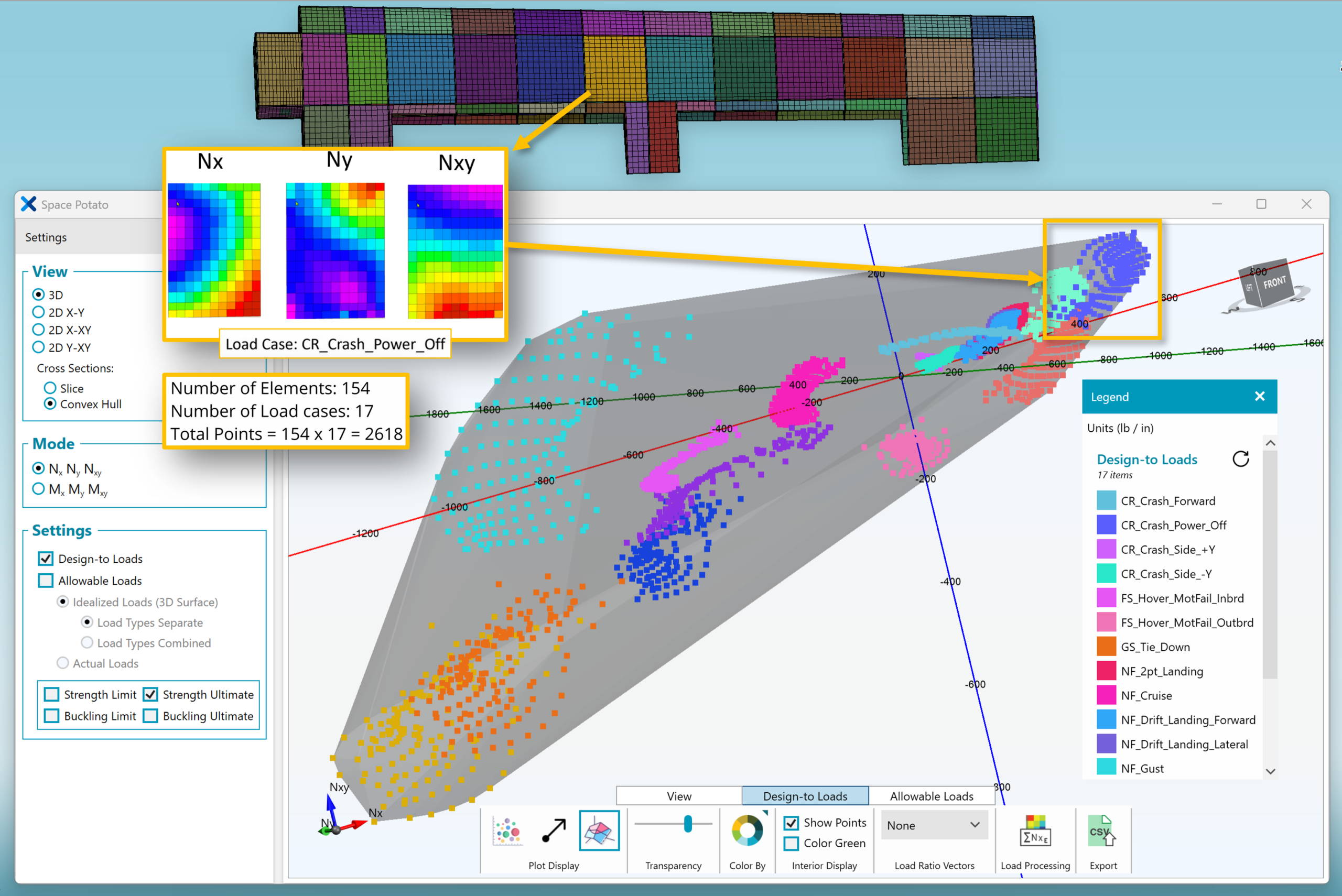
HyperLoads AKA “Space Potato”
HyperLoads extends the HyperX workflow by providing an intuitive way to visualize the Design-to Loads in your Structure as potato plots in 3D space. By overlaying these 3D loads envelopes with their corresponding allowable load envelopes, an engineer can gain an understanding of the structural load carrying capability of their design. Some key features of HyperLoads:
- Design-to Load enveloping and interrogation in 3D space for all Zones, for all Design Load Cases.
- Visual tools for assessing the effects of various Load Cases on the overall 3D envelope.
- Margin vectors showing the approximate distance from Design-to Loads Envelopes to corresponding Allowable Loads Envelopes.
- Rich interrogation and export tools.
FEA Automated Stiffness Constraints
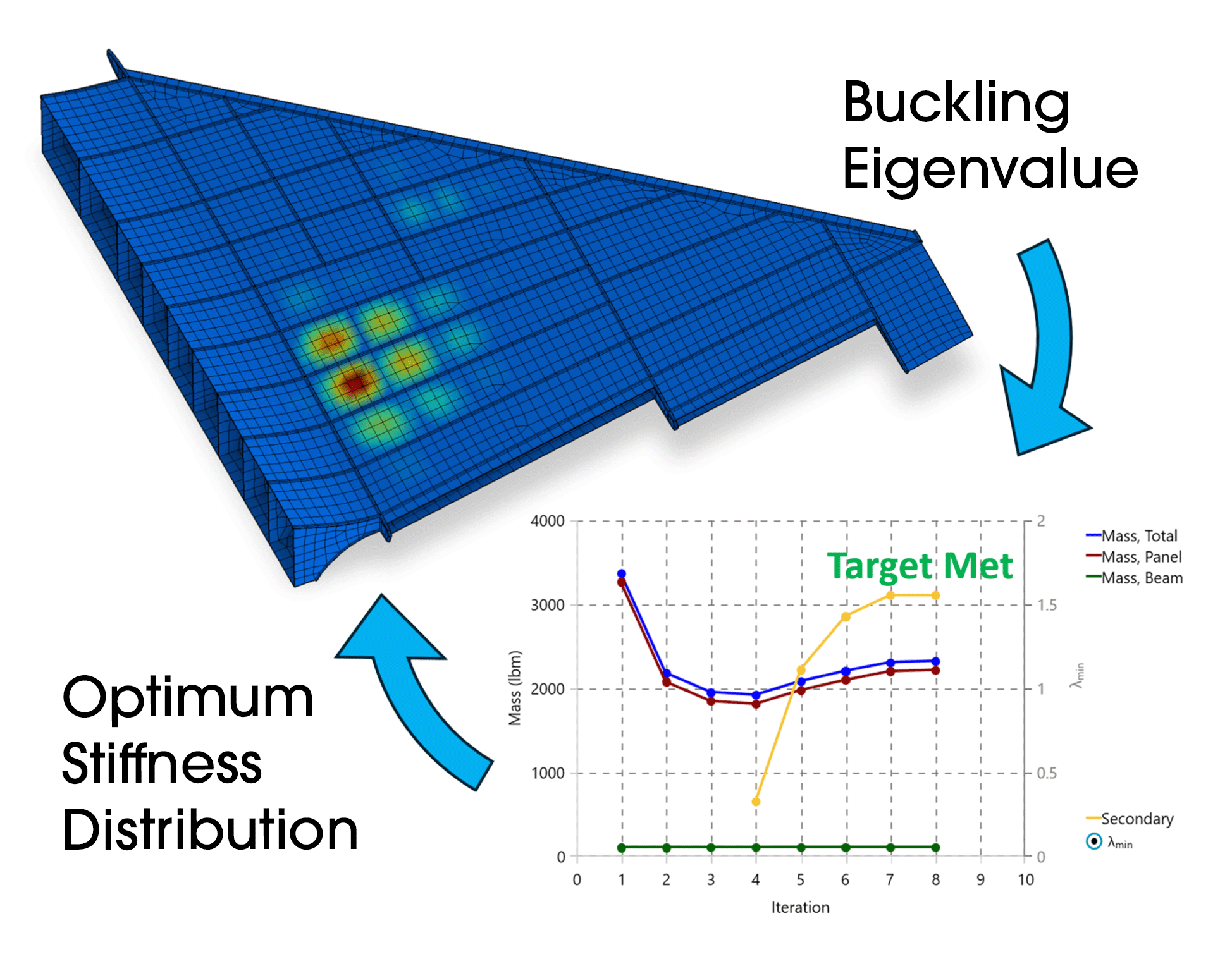
The algorithm used for “Automated Constraints” in HyperFEA has been completely overhauled and improved for version 2026. This algorithm uses a strain energy approach to determine optimum stiffness distribution to meet FEA constraints – such as buckling, frequency, and displacements – while minimizing weight. Summary of improvements:
- Solutions have lower weight than the previous version of the algorithm.
- Robust convergence (avoids undershoot/overshoot, etc).
- Appropriately addresses global (not just local) buckling and frequency modes.
- Less settings-tuning required by the user in order to attain “good” results. The algorithm automatically determines which Zones and which stiffness terms to adjust.
HyperFEA
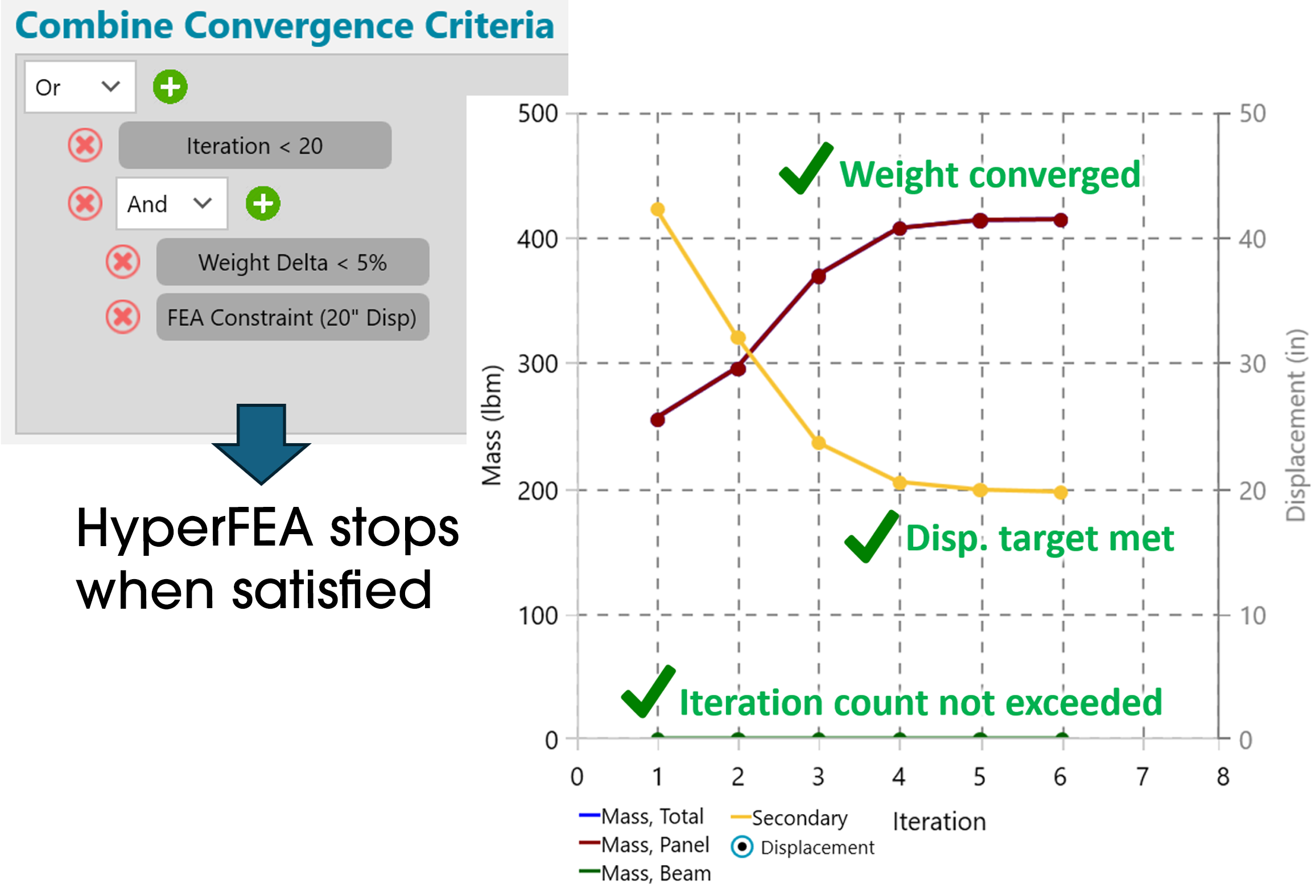
In addition to the improvements for Automated Constraints outlined above, the HyperFEA tool itself has undergone extensive improvements. These include:
- Configurable Convergence Criteria for HyperFEA iterations, allowing for HyperFEA to automatically determine when to stop iterating based on convergence of weight, stiffness, or FEA constraints.
- Improved iteration logic so that masses and corresponding FEA results (eigenvalue, displacement, etc.) are consistently shown on the same line.
- Ability to run HyperFEA iterations using the Project Runner – ensuring multiple runs from multiple different databases can be kicked off sequentially
- Consolidated HyperFEA Settings and Run Settings into common controls shared throughout the software.
Analysis
This version also includes several noteworthy improvements to various analysis processes and methods in the form of enhanced workflows and improved visualization. Most notably:
- New Temperature Profiles replacing Zone-based Temperature Design Load Overrides.
- Support for 1/Kt − 1/3 laminate allowables.
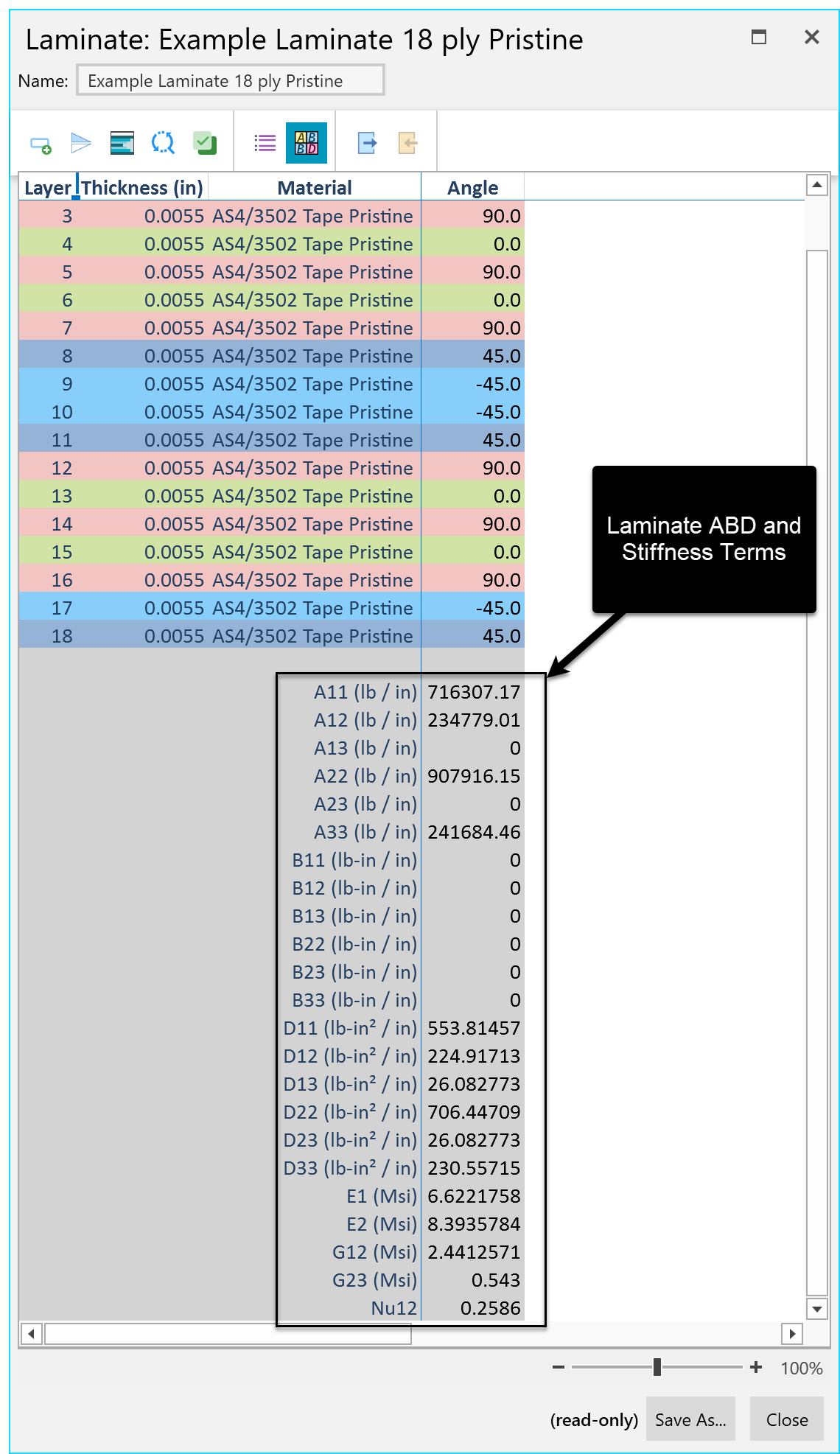
- Display of ABD matrix on Laminate and Laminate Family forms.
- Display of Q matrix on Effective Laminate form.
- Ability to set both reduced/symmetric and “true” D stiffness requirements on Panel Settings.
Other Noteworthy Improvements…
- New Scripting API capabilities, a full list of updates for which can be found here: Release Notes – HyperX Support
- Design, Load, and Analysis Properties from Database Templates are now automatically included in new Projects by default.
- Create Structures and Sets from HyperMesh entities.
- Ability to delete and move Labels in the Viewport (including Probe and Measurement Labels).
- Several quality-of-life improvements to the Package Manager, Script Runner, and Failure Mode forms.
- Automatically mirror plies in the Ply Manager.
- Ability to export model as OBJ file.
See the entrire Release Notes
Want to know about System Requirements?
Like what you see? Download the new version now!

Aerospace Structural Analysis and Design Optimization
Privacy
Site Terms
© 1995 - 2026 Collier Aerospace Corporation. All Rights Reserved.