
Collier Aerospace software helps engineers optimize composite structure design, balancing weight, manufacturability, and performance for cost-effective aerospace applications.
Click here to Read Aerospace Manufacturing and Design Article
November 14, 2025
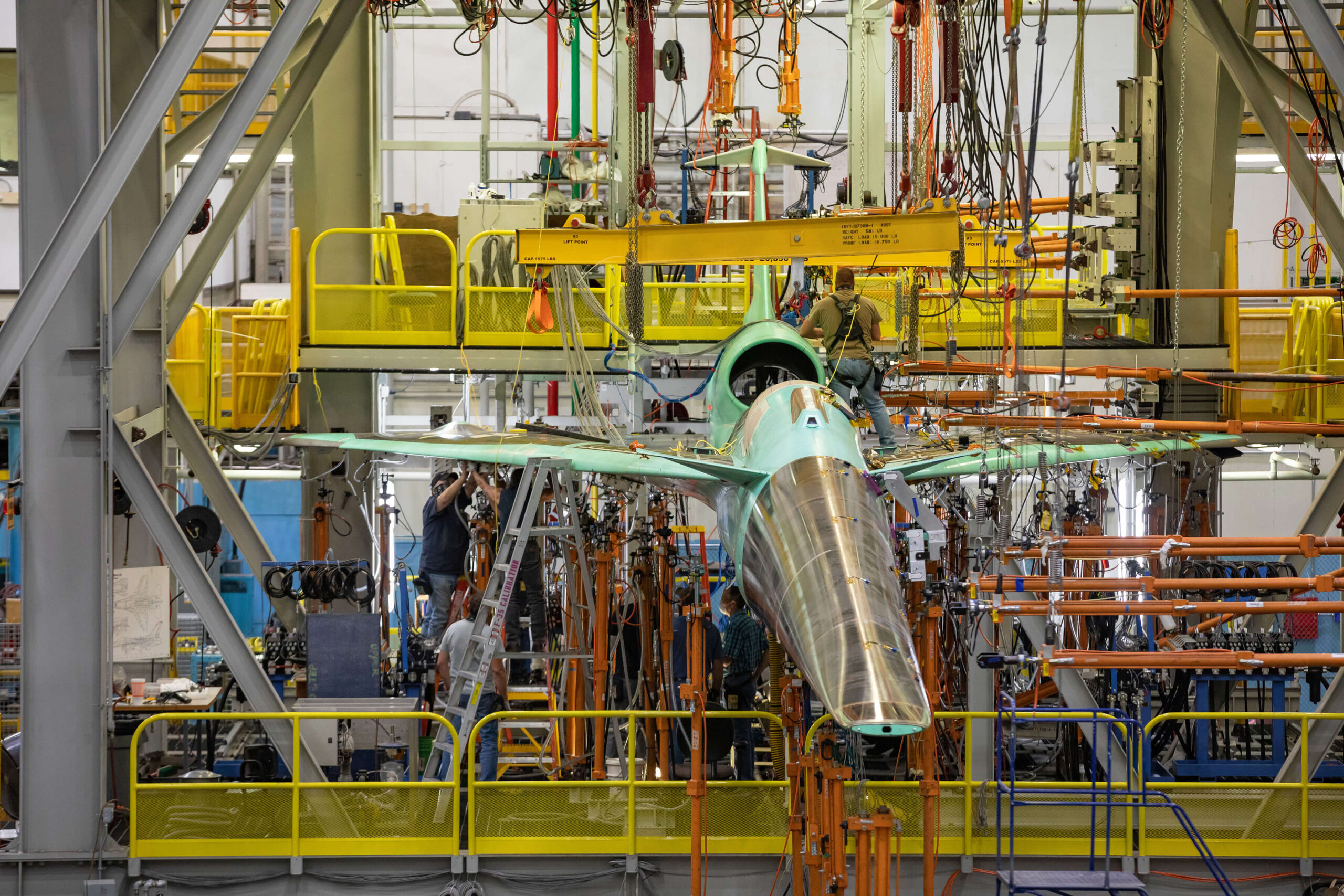
NASA’s X-59 supersonic aircraft undergoing tests at a Lockheed Martin facility. Credit: Lockheed Martin/NASA
In aerospace composite structure design, engineers need to clearly understand and evaluate the tradeoffs between total weight and design for manufacturability (DFM). For example, composite structures with more panel-to-panel size variations weigh less but are more difficult and expensive to manufacture. Conversely, composite structures with fewer panel-to-panel size variations weigh more but are easier and less expensive to produce. Balancing these factors is critical to achieving optimal performance and cost-efficiency in these designs.
To support aerospace engineers in this effort, Collier Aerospace – headquartered in Newport News, Virginia – developed its flagship HyperX computer-aided engineering (CAE) software for designing composite and metal structures. This software can optimize the most lightweight combination of material systems and panel cross-sectional dimensions. Additionally, with the use of the company’s HyperXpert tool, aerospace engineers can see all possible designs with a positive margin of safety and use an interface letting them compare these options effectively.
Traditional CAE applications don’t allow for design space exploration as they provide just a single data point that doesn’t facilitate robust design comparisons. There are other limitations as well. For example, non aerospace-specific CAE software may not generate a stress report for a preliminary and critical design review. Yet engineers are required to provide regulators with margin-of-safety calculations for airframe certifications.
How CAE software optimizes design
HyperX software uses finite element analysis (FEA) results to perform sizing optimization and, in turn, determine the most lightweight combination of materials and panel cross-sectional dimensions, including layup ply angles and stacking sequences. This allows engineers to quickly analyze design alternatives and consider trade-offs.
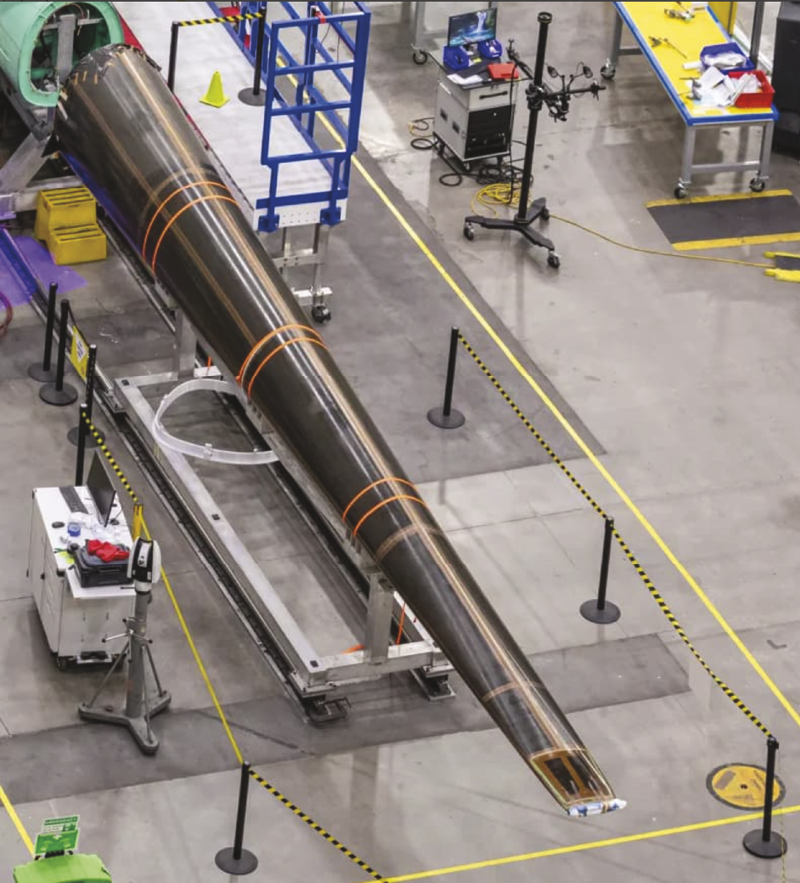
Close-up of the graphite/epoxy composite X-59 nose cone. Credit: NASA, Chris Hanoch, Lockheed Martin
The HyperX software optimizes composite structure designs without requiring engineers to replace their existing tools. The software’s database establishes a digital thread and works with popular FEA and computer-aided design (CAD) software such as Nastran, Abaqus, Optistruct, HyperMesh, Catia, 3DX, and NX CAD. With the HyperX software, engineers can see the most lightweight design for all panels, load cases, and failure criteria without having to resubmit the FEA.
HyperXpert, a tool extending the HyperX workflow, can perform a full factorial design of experiments (DOE) and displays the best options for the design space in a weight-versus-size variation plot. Unlike other approaches to experimental design, the full factorial DOE tool analyzes every combination of variables and determines the individual impact of each. This enables an engineer to decide which variables to link and determine how variables affect each other.
Engineers can quickly compare results, review trends, and select the best design to manufacture because the DOE tool organizes data in a plot. By quantifying objective manufacturability considerations during the earliest conceptual design phases, users can also avoid unnecessary costs and accelerate project timetables. Importantly, they can increase their confidence in making design choices by seeing all their options.
Here are two case studies explaining how innovative companies are using these advanced software solutions to design light and cost-effective composite structures.
WindRunner cargo aircraft developed by Radia
Radia, an aerospace manufacturing company based in Boulder, Colorado, is building the world’s largest aircraft, the WindRunner, to deliver wind turbines with blades up to 100m (330ft) in length to onshore wind farms, avoiding the limitations of ground transportation. Radia sought assistance from Collier Aerospace at an early stage as a software provider and engineering consultant to develop this unique air transportation solution.
Radia used Collier Aerospace’s methodology for structural sizing and analysis and conducted configuration assessments of the wings, fuselage, ribs, spars, stringers, and many other parts to be made of composite material and metal. The aerospace company also leveraged the automated sizing capabilities in the HyperX software to account for unusual variables such as the huge size and capacity of the unpressurized fuselage. This enabled Radia to make significant progress quickly.

In addition to accelerating the engineering cycle and shortening the certification processes from the U.S. Federal Aviation Administration (FAA) and European Union Aviation Safety Agency (EASA), Radia is also concurrently removing weight and costs from composite structures. The company also plans to use software from Collier Aerospace to validate work performed by suppliers that will handle structuring sizing in the detailed design phase.
Swift Engineering’s X-59 nose cone redesign
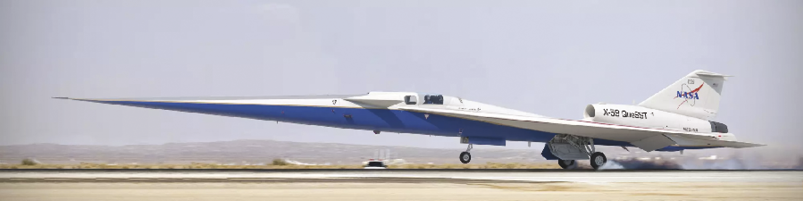
Swift Engineering of San Clemente, California designs and builds high-performance aerospace vehicles. Recent projects include the extended nose cone for the X-59, an experimental aircraft from Lockheed Martin Skunk Works, part of the Quiet Supersonic Technology (QueSST) mission within the U.S. National Aeronautics and Space Administration (NASA). The goal of QueSST’s mission is to establish an acceptable noise standard for commercial supersonic flights over land.
Regulators have banned these flights for decades because they produce sonic booms, a sound associated with shock waves created when an object travels through air faster than the speed of sound. These intense noises can reach up to approximately 194 decibels (dB) and damage physical structures. Aircraft weight is a factor in sonic boom generation and intensity, but the X-59’s nose cone must also divert air flow and provide controlled aerodynamic pressure distribution to mitigate shock waves.
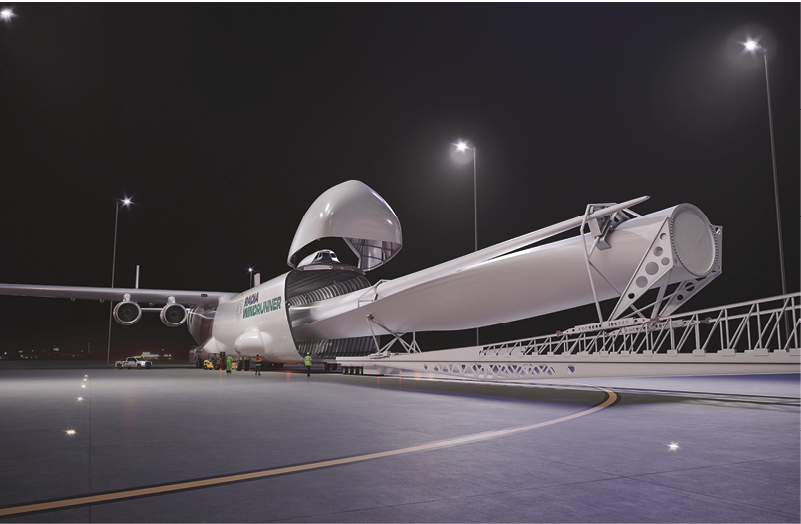
Rendering of Radia’s WindRunner aircraft with wind turbine blades being loaded. Credit: Radia
The preliminary design, weighing 400 lb, specified a graphite/epoxy composite and a honeycomb-core sandwich structure. Swift Engineering used HyperX software to remove unnecessary plies while optimizing the design for stress and stability. Ultimately, the company reduced the nose cone’s weight by more than 25% to 300 lb. The X-59 is expected to generate a barely audible thump instead of a sonic boom, and the elongated nose cone design is an important part of the solution.
In addition to designing and building this composite structure, Swift Engineering was tasked with performing structural analysis and certification testing. The company was also responsible for evaluating a wide range of load cases and providing detailed stress reporting for part release and fabrication. By using the full capabilities of Collier Aerospace’s software, Swift Engineering completed the project’s requirements and delivered the X-59’s nose cone ahead of schedule and under budget.
More possibilities with the right tools
Like Radia, Swift Engineering is reaching new heights with the right tools. HyperX software from Collier Aerospace identifies the lightest material and panel configurations, including ply angles and stacking sequences, so aerospace engineers can evaluate design trade-offs efficiently. HyperXpert enhances the design process by evaluating all variable combinations, enabling engineers to understand and visualize the impact of each factor on the design of composite structures.
These software solutions are also advancing regulatory compliance and DFM by supporting faster and more informed decision-making. As companies like Radia and Swift Engineering use Collier Aerospace’s software to optimize their designs without replacing their existing tools, and without having to resubmit the FEA, aerospace engineers can design lighter and less expensive composite structures more efficiently.
Click Here to Read Article
HyperX® is a registered trademark of Collier Aerospace Corportaion.